Skip to content Skip to footer

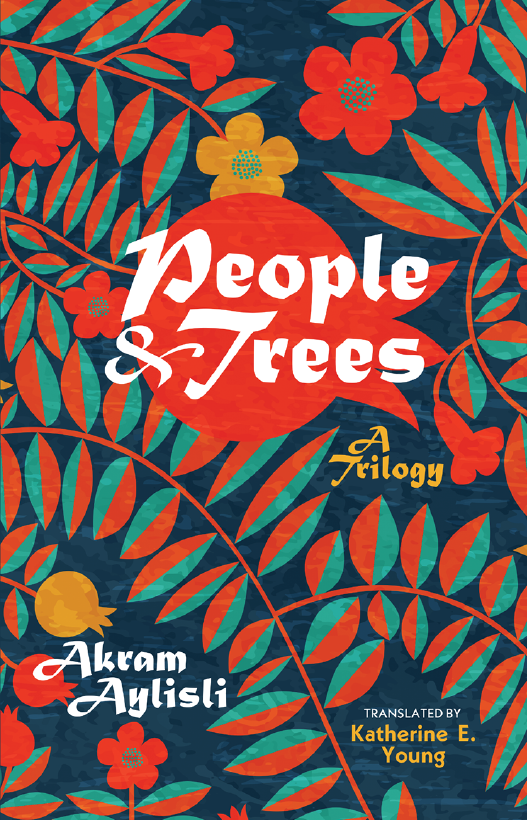
People and Trees: A Trilogy

Akram Aylisli

Translated by Katherine E. Young

Finalist for the European Bank for Reconstruction and Developement Literary Prize 2026

About the Book

Set in the mountains of Azerbaijan just after World War II, Akram Aylisli’s People and Trees chronicles the wrenching transformation of traditional Azeri society under Soviet rule. 

Private land is collectivized; mosques are converted to silk factories or bulldozed to build “palaces of culture.” The young narrator, Sadyk, fantasizes about striding hand-in-hand with a beautiful girl into the bright, socialist future he’s seen on the movie screen. The village women, meanwhile, navigate religious, economic, and social upheaval, including famine and the loss of an entire generation of men to war. Drawing on the rich folkloric traditions of the Caucasus mountains, this timeless collection of “tales” is the work that put Azerbaijan’s greatest living author on the international literary map. 

About the Author

About the Translator

Akram Aylisli is an Azerbaijani novelist, playwright, and editor. His works have been translated into more than twenty languages. Publications in English include Farewell, Aylis, a trilogy of novellas that includes the controversial Stone Dreams. Stone Dreams explores themes of understanding and mutual accountability among Azerbaijanis and Armenians; its publication in 2012 led to public burnings of Aylisli’s books in Azerbaijan. Since 2016, Aylisli has been the target of a politically motivated criminal investigation by the Azerbaijani government that imposes significant restrictions on all his activities; he lives under de facto house arrest in Baku, Azerbaijan.
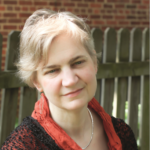
Katherine E. Young is the author of the poetry collections Woman Drinking Absinthe and Day of the Border Guards (2014 Miller Williams Arkansas Poetry Prize finalist) and the editor of Written in Arlington. She has translated work by Anna Starobinets (memoir), Akram Aylisli (fiction), and numerous Russian-language poets from Kazakhstan, Russia, and Ukraine. Awards include the Granum Foundation Translation Prize, the Pushkin House Translation Residency, an Arlington County (Virginia) Individual Artist Grant, a National Endowment for the Arts translation fellowship, and a Hawthornden fellowship (Scotland). From 2016-2018, she served as the inaugural Poet Laureate for Arlington, Virginia.


What others have said about People and Trees:

This is a marvelous read. The world evoked by Akram Aylisli in his trilogy, Tales of Aunt Medina, The Tale of the Pomegranate Tree, and the titular People and Trees (with the brief not-quite epilogue, The Tale of the Silver Tweezers) may seem strange to western readers, but soon enough grows familiar. And familiarity breeds not contempt but wonder: how does he manage to do this? How has he managed to make the villages of Azerbaijan so compelling a home that we shudder to leave? And the list of characters evoked by our youthful narrator, Sadyk, son of Nadjaf—from Aunt Medina to Mukush, from Aunt Nabat to Avez and Merdzhan, from Yakub and Yusuf to Uncle Nazar—seems cut from stone and hollowed out of wood; they are elemental and of nearmythic stature. It’s the high task of fiction to make a dark world visible and make, of that darkness, bright light. Aylisli (brilliantly translated here by Katherine E. Young) is a master for us all.

In People and Trees, Akram Aylisli writes with a lyrical prose that affirms there are “mountains as light as down,” even as he tells stories of destitution, disappointment, and abuse. His book combines local history with a fairytale’s universality, the real with the imaginary, the human with the natural. Katherine E. Young’s translation does wonderful justice to this vision.

This triptych is beautifully and specifically placed in the immersive landscape of village life in Azerbaijan amid the roiling forces of the 1940s; it captures a childhood that is grim yet magical, an ethereal fairy tale that will resonate with modern readers. One can feel the love and attention that went into this translation.

Akram Aylisli’s People and Trees, translated by Katherine E. Young, for the first time brings to English readers the compelling story of young Sadyk, who observes and narrates his life in the mountains of Azerbaijan. One of Azerbaijan’s most noted writers, Aylisli here tells the story of life in early Soviet Azerbaijan in three novellas and a short epilogue. Beginning with the departure of many of the men to fight in World War II, the story focuses on the lives of the women left behind, who must raise the children and seek emotional and physical comfort as best they can. Through his lyrical prose and close attention to detail, Aylisli draws the reader into the physical setting of the looming mountains and into the interior and emotional landscape of the community

Akram Aylisli’s poetic writing combines the mysterious (the life of trees) and the familiar. People and Trees is a story about village women—the “aunts” and “grandmothers” who play a formidable role in holding together an otherwise male-dominated society during and after the Second World War. As I read People and Trees, I recalled faces from my visits with rural Azerbaijanis displaced during the Karabakh conflict in the 1990s. The relationships among the people in Aylisli’s fictional village also remind me of my own “aunts” and “uncles” as I grew up in midwestern Illinois in the late 1940s and 1950s. I enjoyed reading "People and Trees" for its dreamlike imagery of a long-forgotten time and place—mysterious Azerbaijan and familiar America. You don’t have to know Azerbaijan to appreciate Aylisli’s skillful, poetic use of words; he reminds us just how small a planet Earth is in terms of our collective human experience.

The multiple themes of People and Trees—the story of young Sadyk, his family, and their village neighbors; Azerbaijani culture straddling World War II, impacted by both war and the Soviet system; the war’s losses and the changes they wrought—are carefully interwoven into an artfully crafted story. This is an important trilogy of novellas that needs to be read and studied in light of current world events. The translation, the trilogy’s first into English, provides an accessible text that opens the story in such a strong, knowable way; its quiet power enters our imaginations and holds us throughout.

In simple but powerful prose, Akram Aylisli has conjured a village in full, a world so visceral and immediate you can taste the dried mulberries, feel the heat of the samovar, and hear the guns of war, never far away. You can also sense the unspoken tensions among villagers, the duplicity of local politicians and, most of all, the abiding bond between aunt and nephew that infuses every page of this tender and endearing coming-of-age novel, fluently rendered in Katherine E. Young’s excellent translation.

Akram Aylisli’s People and Trees offers a poignant exploration of the complex relationship between people, place, and memory in Soviet Azerbaijan. What stands out to me as a folklorist is Aylisli’s masterful use of landscape and communal memory as narrative devices. Aylisli weaves folklore-like elements into the lives of his characters, reflecting the timeless struggle between tradition and modernity. His portrayal of village life is layered with symbolic references to nature that serve as metaphors for resilience, cultural heritage, and the passage of time. This trilogy not only preserves the oral traditions of Azerbaijan but also questions the intersection of political history and collective identity, making it a significant contribution to both literature and the study of folklore.

With striking detail and clarity, Akram Aylisi gives us a vivid account of a people grappling with change. People and Trees is told through the eyes of a child, a sometimes-unreliable narrator: interesting and tactile characters jump off the page, but we can only know them as well as the boy understands them. The subtle power of this story lies in the fact that Sadyk is a mirror for his society, navigating issues that range from gender relations to the loss of traditional ways of knowing to the ever-present tension between war and peace. Who will this boy—this society—become?

Videos related to People and Trees

People and Trees Book Launch
An Interview with Akram Aylisli
The Unquiet Past: memory, conflict, and the writer's voice

Reviews

The name of the Azerbaijani writer Akram Aylisli became familiar to English-speaking readers in 2018 with the publication of Katherine E. Young’s translation of his novella Stone Dreams. It appeared in the book Farewell, Aylis, on the wings of a political controversy connected to the earlier Russian-language publication. In fictional form, Aylisli broke with the political ideology and accepted dogma of his country by addressing the entrenched conflict between Azerbaijan and Armenia, humanizing characters on both sides of the border, and offending Azerbaijan’s political elite in the process. The writer was stripped of the honors he’d earned during his long and illustrious literary career, and his books were not only banned in Azerbaijan but also subjected to staged burnings.

People and Trees is a pastoral set in Soviet Azerbaijan in the 1940s. If that sounds dull, then do not be deceived: Akram Aylisli’s novel is anything but.

Aylisli, who recently turned eighty-seven, is best known for Stone Dreams (2012; 2022 in English), a novel that challenged his country’s ethno-nationalist orthodoxy concerning its conflict with Armenia. Stone Dreams tells the story of the pogroms carried out against Azerbaijan’s Armenians, both in Baku in 1990 and, at the start of twentieth century, in his home region, Nakhchivan, a remote exclave west of Azerbaijan, just across the border from Iran. Nakhchivan’s Armenians have now all gone, erased from Azerbaijan’s official history, and so too have Baku’s. Aylisli’s exploration of his countrymen’s misdeeds was an act of courage for which he paid a heavy price: he was publically vilified and stripped of various state awards and privileges.

The Azeri people are a Turkic group of people who primarily live in the Republic of Azerbaijani and Iran’s northwest region. A people of mixed ethnic origins, the Azeri speak the Azerbaijani language and are predominantly Shia Muslims. Throughout history, the Azeri were subjected to numerous invasions, and before Azerbaijan asserted its independence in 1991, Soviet regimes suppressed the Azeri people and their language in numerous ways. Language oppression was a primary tactic, with Russian being a mandated second language, a language taught to Azeri children, and with the Cyrillic alphabet replacing the Azerbaijani one. In Akram Aylisli’s People & Trees: A Trilogy, translated by Katherine E. Young and published by Plamen Press, a post-World War II Azerbaijan reveals an Azerbaijan where men dream of life before collectivization, women thwart societal and religious norms, and the young narrator, Sadyk, revels in youthful fantasies.

Go to Top
